Explain the Differences Between the Layers of Gastrointestinal Tract
The GI tract can be divided into four concentric layers in the following order. The muscular layer of the digestive tract a consists of an outer voluntary layer and an inner involuntary layer b is made of 3 and sometimes 4 layers of tissue c consists of an.
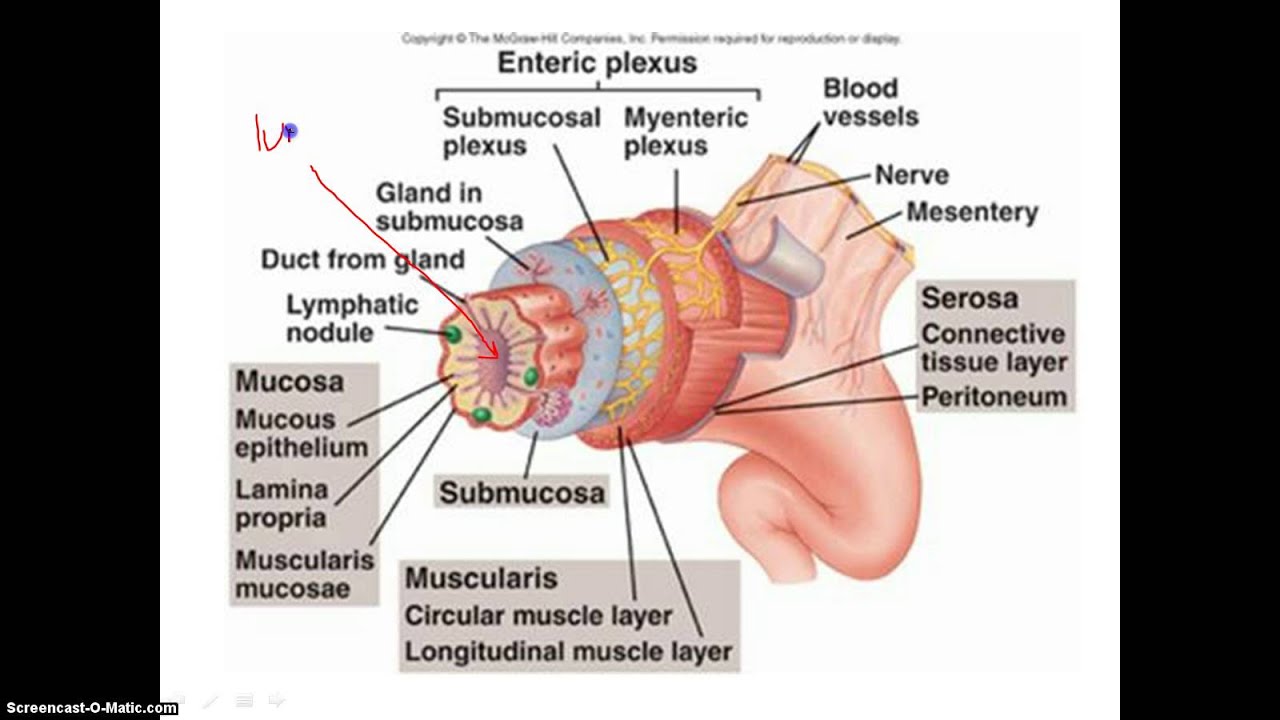
The 4 Layers Of The Alimentary Canal Youtube
Each layer is composed of different tissues.

. The GI tract is composed of four layers. The outer layer of the stomach wall is smooth continuous with the parietal peritoneum. The submucosa is relatively thick highly vascular and serves the.
The wall of the GI tract from the esophagus to the anal canal has four-layer from deep to superficial are the mucosa submucosa muscularis and serosaadventitia. In the following portion from the lower esophagus through the large intestine food moves by peristalsis. The GI tract contains four layers.
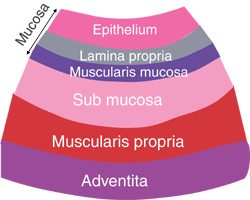
The four layers in more detail. The smooth muscle responsible for movements of the digestive tract is arranged in two layers an inner circular layer and an outer longitudinal layer. The innermost layer is the mucosa underneath this is the submucosa followed by the muscularis propria and finally the outermost layer - the adventitia.
Material moves through the rest of the tract by mass movements which transport tract contents over long distances. An anatomical torso geometry is represented at the broadest scale. They are mucosa submucosa muscularis and serosa.
Gastrointestinal tract or GI tract has four layers. The most important differences can be found in the thoracic esophagus and most of the rectum which are devoid of a serosa layer and in the stomach where there is a third muscular layer deep to the circular layer called the oblique layer that contributes fibers to the. A Mucosa-The mucosa or innermost of the GI tract is a mucous membrane.
The Layers of the GI tract. Mucosa is made up of simple columnar epithelium. Composed of two layers of muscle tissue.
Explain the differences between the layers of the gastrointestinal tract. The muscle of the inner layer is arranged in circular rings around the tract whereas the muscle of the outer layer is arranged longitudinally. The structure of these layers varies in different regions of the digestive system depending on their function.
Explain the differences between the layers of the gastrointestinal tract. Layers of the Gastointestinal Tract. An anatomical model of the human stomach is an example of the models at organ level while at the tissue level the different muscle layers and their cell types.
Biology questions and answers. The GI tract contains four layers. Difference is in their extension Digestive tract extends from the oral cavity to the anus Gastrointestinal tract extends from the stomach to the anus Greek Gaster means stomach.
The key difference between muscularis layer of esophagus and stomach is that muscularis layer of the esophagus has two layers while muscularis layer of the stomach has three layers. The innermost layer is mucosa epithelium lamina propria and muscular mucosaeouter to mucosa is the submucosa then muscularis propria inner circular muscle layer intermuscular space a. Oesophagus is exceptional in having a compound squamous epithelium on the inside and an adventitia on the outside.
Above the diaphragm the outermost layer of the digestive tract is a connective tissue called adventitia. The key difference between gastrovascular cavity and alimentary canal is that gastrovascular cavity is a two-way digestive tract which has only one opening while the alimentary canal is a one-way digestive tract which has two openings. Learn vocabulary terms and more with flashcards games and other study tools.
Explain how the structure of each of the following digestive tract compartme. In stomach and small intestine the mucosal layer is folded. 05 points Answer.
The GI tract is about 9 meters in length. Four layers of the Gastointestinal Tract. The gastrointestinal tract has a form of general histology with some differences that reflect the specialization in functional anatomy.
Illustration of the different spatial scales of models involved in the representation of the gastrointestinal system. All segments of the GI tract are divided into four layers. Serosa is the outermost covering of the gastrointestinal tract.
The innermost layer is the mucosa underneath this is the submucosa followed by the muscularis propria and finally the outermost layer - the adventitia. Explain the differences between the layers of the gastrointestinal tract. The structure of these layers varies in different regions of the digestive system depending on their function.
Based on the body plan organisms can be primitive or advanced. From inside to outside these are mucosa submucosa muscular layer and serosa. There are variations from GI organ to GI organ in the arrangement content glands thickness of the layers etc.
Each layer has different tissues and functions. The gastrointestinal tract in humans begins at the mouth continuing through the esophagus stomach and the small and large intestines. Connective tissue layer lying just below mucosa and contains many blood vessels and nerves.
Wavelike contractions of the muscular tissue called peristalsis move food and digestive juices through the digestive tract. From the inside out they are called. Start studying Digestive System 4 layers of GI tract tissue.
The myenteric plexus is between the two muscle layers. Between the two muscle layers are the myenteric or Auerbachs plexus. View the full answer.
In the first portion of the GI tract from the oral cavity to the upper esophagus food moves by voluntary muscular action. There are 4 layers in gastrointestinal tract. The motility of the GI tract is.
It is composed of epithelium connective tissue lamina propria and a layer of smooth muscle muscularis mucosa. The inner wall mucosa and submucosa layers is thrown into folds known as rugae or gastric folds which allow the stomach to distend upon the entry of the food. Human Anatomy Lab Manual.
The stomach has an extra layer an inner oblique muscular layer. Summarize the role of GI tract hormones following a meal. A bolus of food enters the stomach from the esophagus.
There are many supporting organs such as the liver which helps by secreting enzymes that are necessary for the digestion of food.
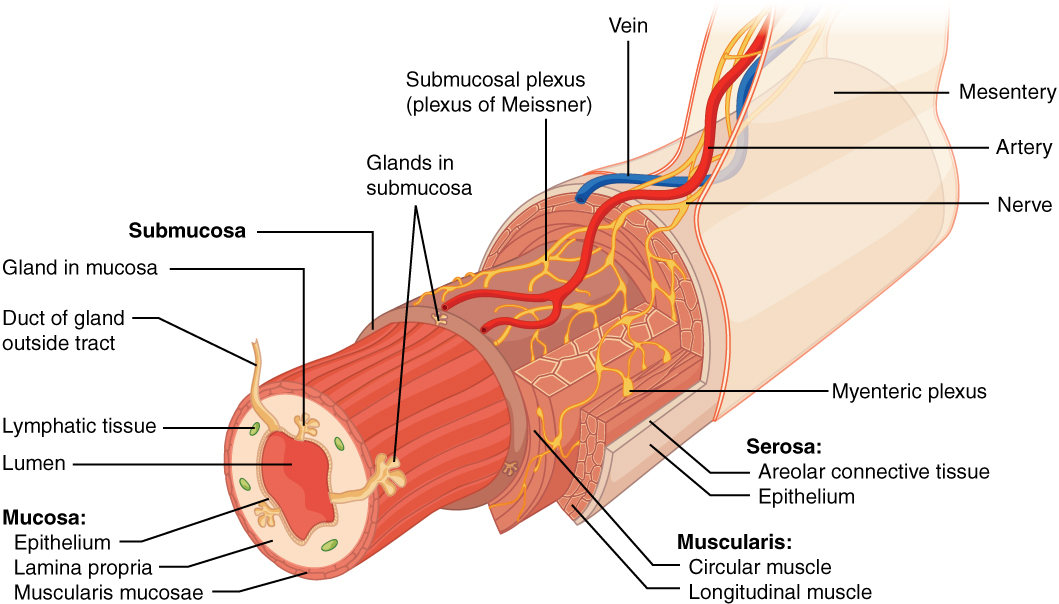
From The Lumen Outward What Are The Layers Of The Gastrointestinal Tract Socratic
Layers Of The Gi Tract Adapted From 23 Download Scientific Diagram
Oral The Histology Guide
Belum ada Komentar untuk "Explain the Differences Between the Layers of Gastrointestinal Tract"
Posting Komentar